A Legacy of Elegance and Detail
A friendly suggestion: whenever you buy a bulky book, buy the real print. With that being said, back in 2022, one of my dearest friends gifted me My Name is Red by Orhan Pamuk. It is worth mentioning that I liked the book initially just for its exquisite cover work. Basically, My Name is Red, though being a crime thriller, took me to the unknown world of Islamic miniature art—a form of art that showcases the legends and epics of the Islamic Age of Glory. The book begins with a corpse narrating how he was killed. Nonetheless, soon enough, the murder reveals its connection to an apprentice and his master, who were assigned by the Sultan to embellish a book with miniature art.
Miniature art is a form of art that focuses on intricate details, captivating people for centuries. In Islam, it is considered haram to paint faces, as we strongly believe only Allah (SWT) is our Creator, and to paint His creations is forbidden. Therefore, miniature art avoided depicting faces, focusing instead on depth from the perspective of Allah (SWT). On the other hand, Frankish or Venetian painters portrayed realistic figures, prioritizing the human perspective. Islamic miniature art first emerged during the Abbasid Caliphate, flourishing in the courts of Baghdad. As this art form spread across regions like Persia and Turkey, miniature painting thrived during the Islamic Golden Age.
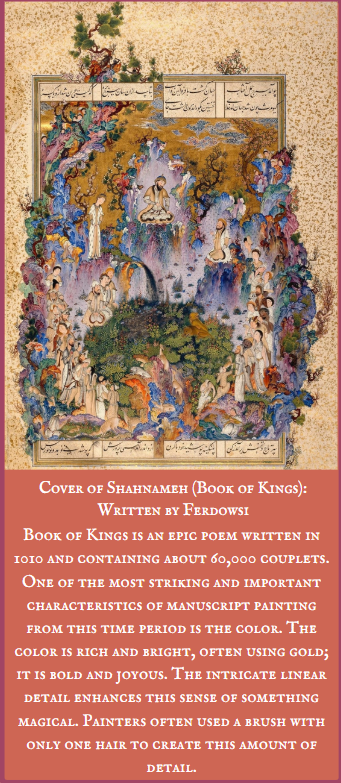
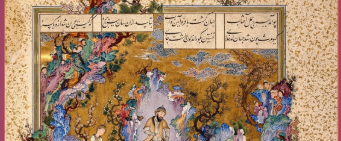
Each painting showcases stunning royal customs or ferocious warriors. Miniature artists employed fine brushes and natural pigments, often incorporating gold and silver to add luminosity to their works. For instance, the yellow hues you see in The Book of Kings are pure gold. This meticulous art required both patience and passion, as an apprentice would spend years to master the craft, while an ustad would dedicate his entire life to perfecting and passing on this majestic art form. While we are all familiar with the Frankish style of art, from the Mona Lisa to the Girl with a Pearl Earring, we are often unaware of our Islamic miniature art.
This clash of art forms and perspectives reflects the modern-day notion of Muslims. Islamic miniature art, with its intricate beauty and historical significance, remains a treasured component of art history. We should strive to uncover this historic form of art and reiterate the legacy of Islamic artistry