
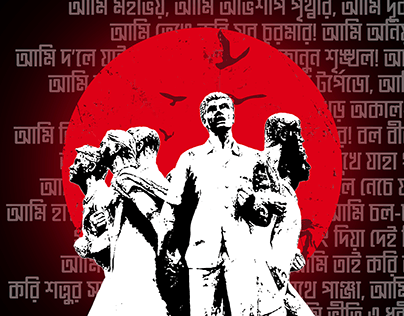
While I write this piece, I can see students outside my window controlling traffic in the scorching heat, while others are repainting the same wall where they painted the face of a fascist just last week. They seem restless, as if even the sun is hesitant to cast its heat upon them. Their spirit and determination have toppled 15 years of an autocratic regime in Bangladesh. Can the power of youth ever be questioned?
Recently, a conversation between the fascist government’s home minister and high-ranking police officials was leaked. In it, a police officer said, “Sir, if I shoot a bullet, one dies, one is injured, but that doesn’t stop the others. How many bullets will it take to stop all the students?” Although the police couldn’t lay down their arms then, the uprisings have shaken the very reality of the world. This is the first-ever Gen Z movement globally.
There has been much speculation about how a simple anti-discrimination quota reform movement ousted the government. The answer is straightforward: when Bangabandhu visited Naya China to attend a peace conference, he observed that the Chinese had everything—peace, tranquility, and slow but steady economic progress—except one thing: freedom of speech. He predicted that this would be the root cause of the fall of Mao Zedong’s government, and it did happen. People may accept a lack of food and shelter, but they will not tolerate having their right to speak taken away. Orwell’s 1984 vividly depicts this human need. The novel warns us about the dangers of totalitarianism, where silencing free thought and speech doesn’t just control people—it also destroys their individuality and humanity. The mass protest in Bangladesh once again reminds us that this right to speak is the foundation of any free society, and without it, we lose what makes us truly human.
This is the reason the quota reform movement transformed into the mass uprising of 2024. Guardians joined their children; teachers, lawyers, musicians, artists, workers, and people from all walks of life lent their support. The students ignited the spark our nation needed for reform. Where once our country was led by flatterers and sycophants, it is now led by the brightest minds of our nation. They successfully ousted the fascist government, though the cost was steep.
More than a thousand people died, according to Al Jazeera; thousands more were crippled, many of whom were the sole breadwinners for their families. The cadres of the BCL and BAL destroyed national properties and committed countless other atrocities. Before resigning from power, they tried to cripple our nation, much like the Pakistanis did during the Liberation War of 1971. But our vigilance helped to some extent: people guarded cities at night, students managed traffic, cleaned the streets, rebuilt national properties, and reformed corrupt institutions.
Though we succeeded in removing the weeds from our garden, now we must plant the flowers. And that task is even more difficult than the first. But when I see students volunteering in the streets, something inside me believes it’s possible. We have set an example for the world to see, and I believe we have many more to set. Let’s make Bangladesh great, together!